Blog
Growth Tips
Scaling a real estate investing business requires more than just doing more deals. Real estate investor growth comes from building repeatable systems for lead management, deal analysis, team coordination, and financial tracking. Without these systems, adding volume simply adds chaos. The investors who grow sustainably are those who invest in infrastructure before they need it. This means documenting your processes, tracking your key metrics, and building a team around clearly defined roles rather than ad hoc responsibilities.
A CRM for investors is one of the most impactful tools for managing growth. It centralizes your pipeline, automates lead follow-up sequences, tracks communication history, and provides visibility into which marketing channels deliver the best returns. Combined with disciplined processes for lead qualification and disposition, a well-configured CRM becomes the operating system for your entire business. The right CRM eliminates the spreadsheets, sticky notes, and memory-based follow-up that cause leads to fall through the cracks as your volume increases.
Read our growth tips articles for practical advice on building systems, hiring your first team members, choosing the right technology stack, and making the transition from solo operator to business owner. These guides cover everything from time management frameworks to CRM selection criteria for real estate investors at every stage of growth.
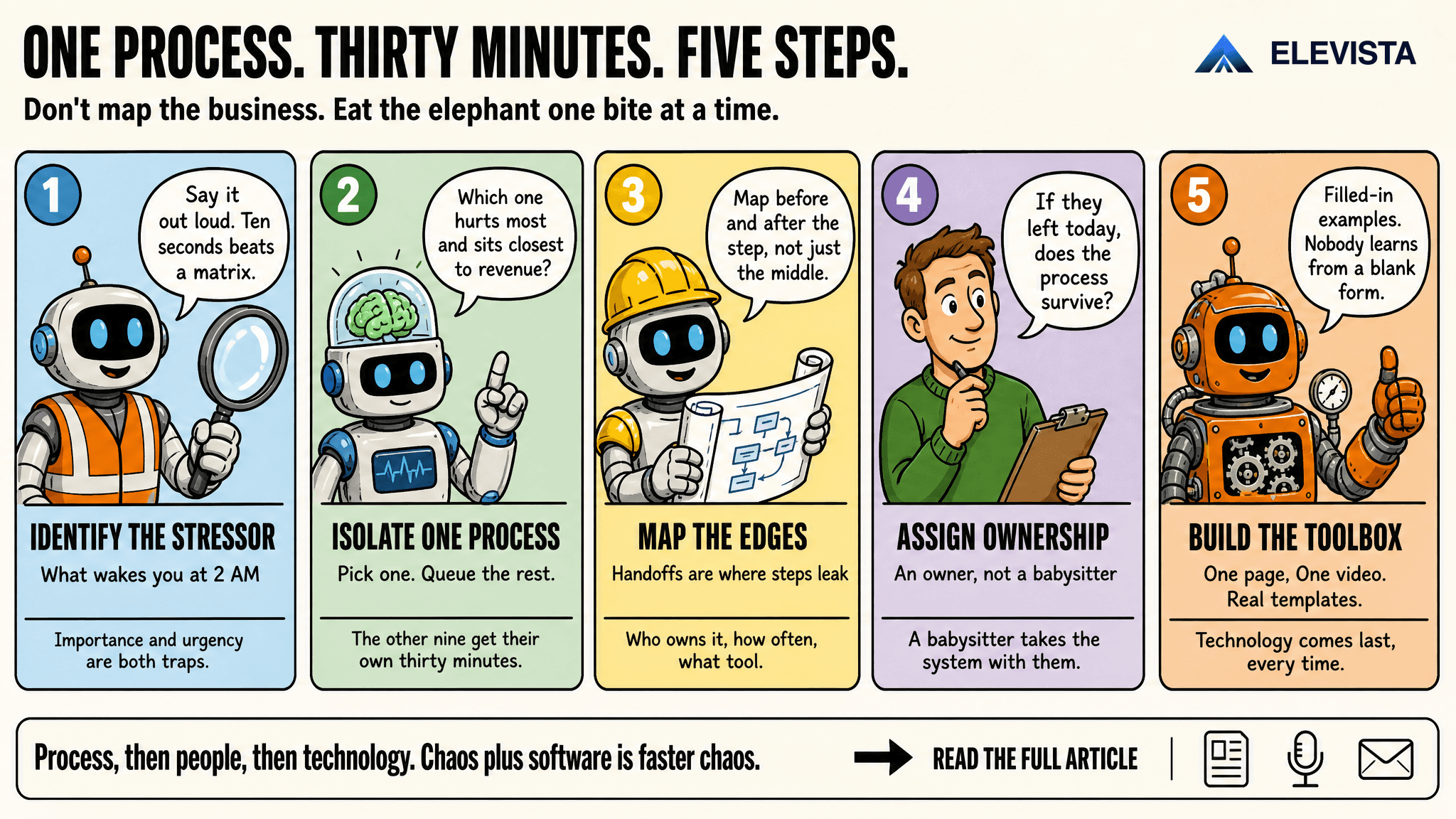
Systemize Your Flipping Business in 30 Minutes, One Process at a Time
You don't need to map your whole operation. You need one process, thirty minutes and five steps. Here's the version I actually use.
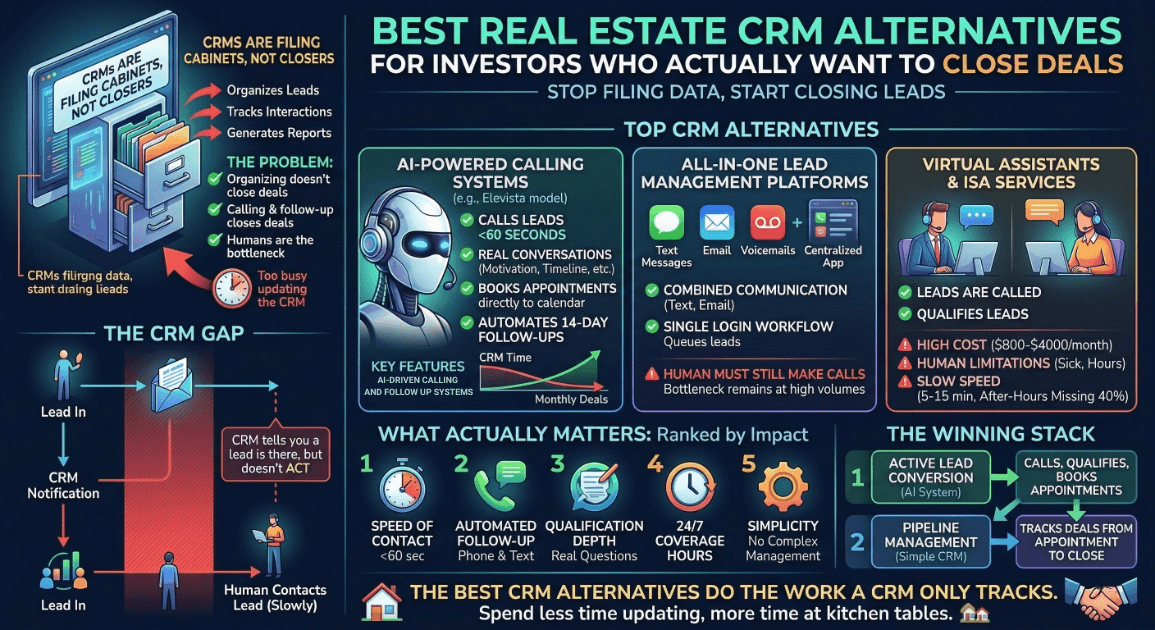
Best Real Estate CRM Alternatives for Closers
Your CRM tracks leads. It doesn't call them. Here are the tools that actually convert the leads your CRM is just organizing.
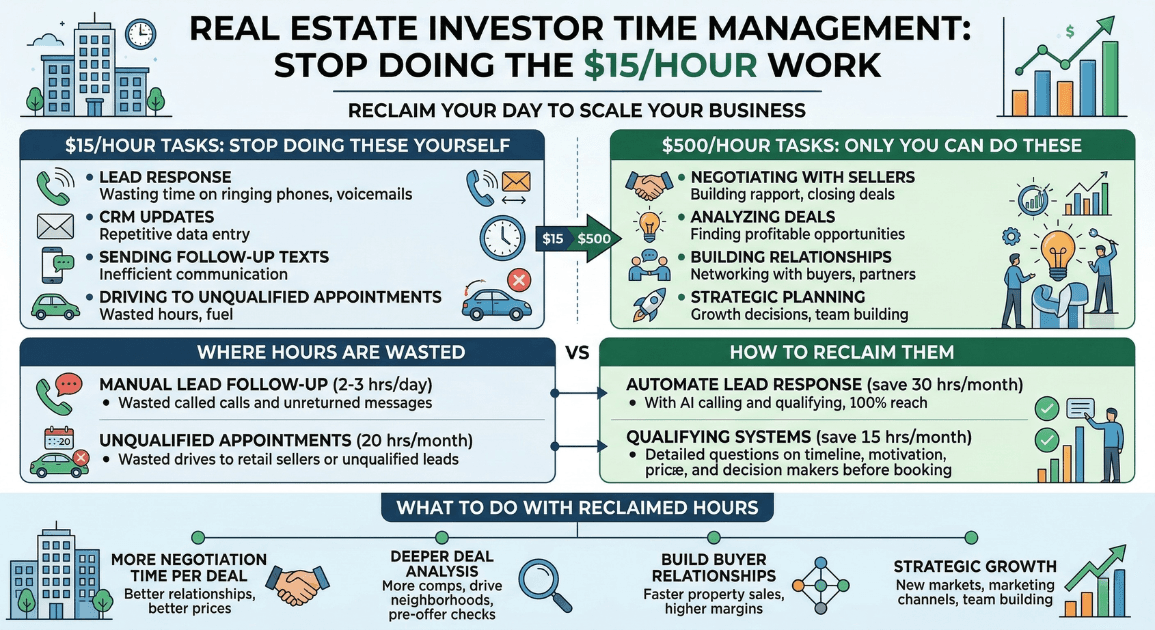
Stop Doing the $15/Hour Work in Your Investing Business
Most real estate investors spend 60% of their day on tasks that don't close deals. Here's how to reclaim the hours that actually make you money.
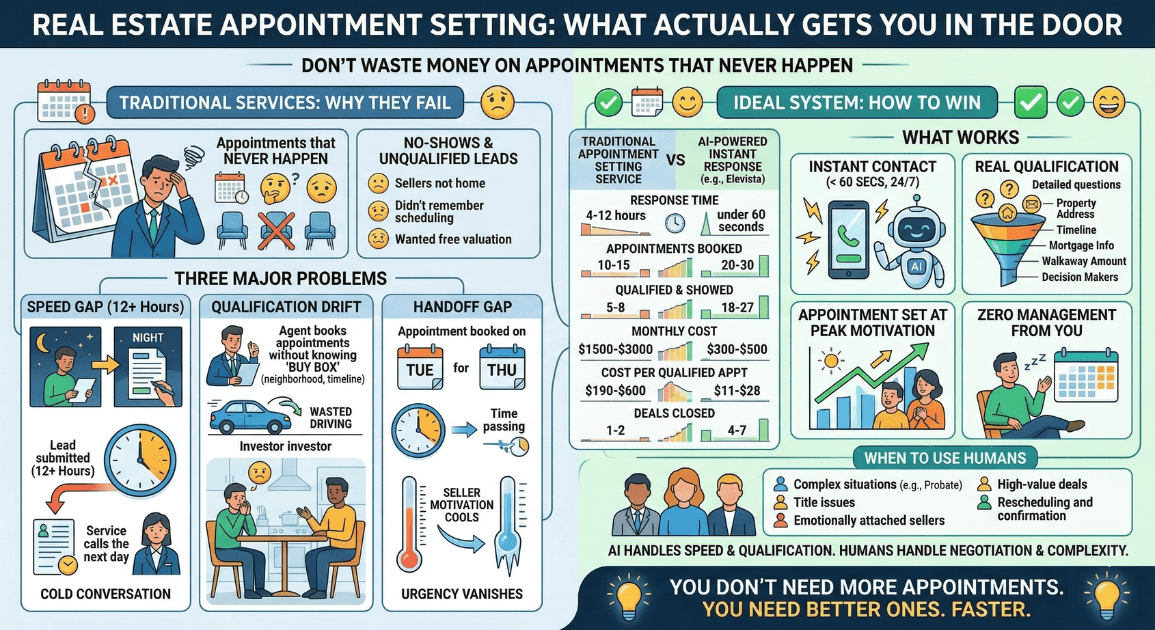
Real Estate Appointment Setting Services: The Real Cost
Most appointment setting services charge a lot and deliver little. Here's what to look for, what to avoid, and what top investors actually use instead.