Real Estate Lead Conversion: Why You're Losing Deals You Already Paid For

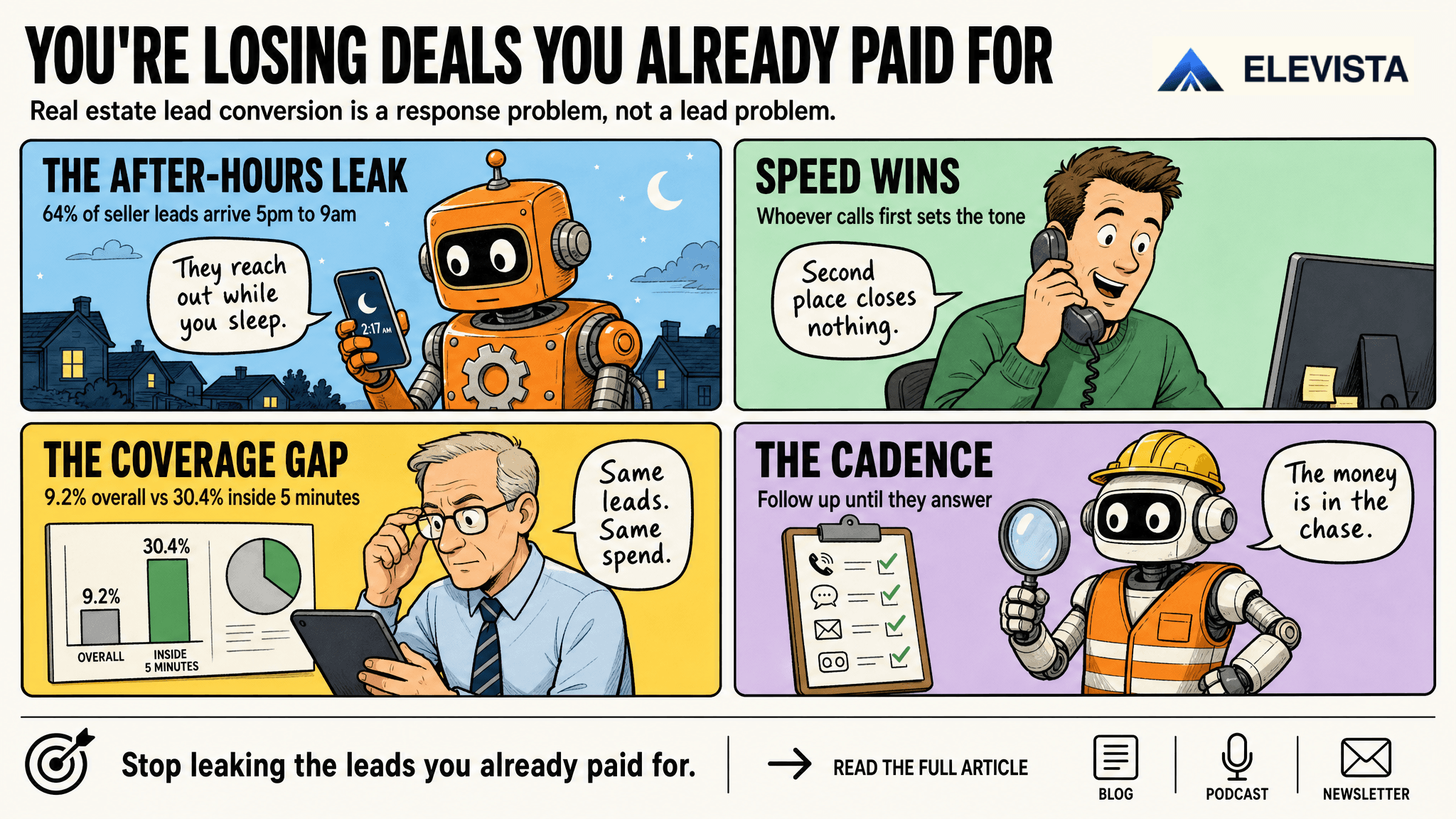
You don't have a lead problem. You have a response problem.
I learned this the expensive way. For years, I treated lead conversion like a math problem of volume. More marketing, more leads, more deals. So I spent more. And my close rate barely moved.
Then I lost a big deal because I was slow to follow up and I got curious. Was my procrastination causing me to lose opportunities? I mapped my last 30 inbound leads. Arrival time on one axis, which ones I won on the other. The leads showed up at night. The wins all clustered 9 to 5. I was paying for a pipeline and closing the small slice I happened to catch live at my desk.
That gap is where my competitors won. Here's the system that closed it.
Lead conversion in real estate is three things, in order
Forget funnels for a second. When a motivated seller raises their hand, you win or lose on three moves.
Speed. Who calls back first. Qualification. Whether you're talking to a real opportunity or a tire-kicker. Cadence. Whether you follow up enough times to actually book the appointment.
Most operators are decent at qualification and follow-up. They lose on speed and they lose it in their sleep.
Speed is the whole game and the clock is brutally unforgiving
Here's what I've watched happen on my own deals for years. The seller who fills out the form on our website at 11pm isn't shopping. They're exhausted. Done. They just want their problem gone.
The first investor who picks up the phone gets to come from a place of help and set the whole tone. Everybody who calls after that sounds like a pitch, because the seller already trusts somebody else.
So when their lead comes in at 11pm and we call back at 9am, I'm not late by a few hours. At best, I'm in second place behind an investor who answered overnight.
You can't win from second place, unless first place makes a mistake. And by the morning, that's exactly where you are.
The hole you can't see: where lead conversion real estate operators actually leak
At Clark St Homes, 64% of our qualified motivated-seller leads come in between 5pm and 9am. Off the clock. While I'm at dinner, asleep or coaching my daughter's game. Funny thing, my team requires sleep.
64% isn't not a rounding error. That's the majority of our pipeline.
Now run the math most investors never run. The leads cluster after hours. The wins cluster during business hours. The leads I catch live close just fine. The ones that come in at night leak to whoever answers and by the time me or my team call back at 9am the seller already talked to at least one other person.
When I actually measured it, our overall close rate on inbound was 9.2%. But on the leads we reach, qualify, and book an appointment with inside the first five minutes, we close 30.4%. Same leads. Same marketing spend. The only difference was who answered first.
That's not a lead gen problem. That's a response problem.
The follow-up cadence that gets the rest
Speed gets you in the door. Cadence gets you the rest.
The leads you don't reach in those first five minutes aren't dead, but they are much harder to convert. They've cooled off and likely already talked to someone else. It takes more touches to reconnect and most investors quit after one or two calls and blame the lead.
Cadence is how you stay in those deals instead of writing them off.
Here's the cadence we run on every inbound:
- Call back inside 1 minute. Every time. No exceptions.
- If no answer, text immediately. People who won't pick up a call will text back.
- Day 1: one more call, one more text.
- Days 2 through 7: one touch a day, alternating call and text.
- Then drop to weekly for a month before the lead goes cold.
Why this is so hard to fix with people
You have three honest options to cover off-hours.
Work the phone yourself, 24/7. You won't and you shouldn't. That's not a business, that's a hostage situation.
Hire a VA across the world to catch the night calls live. Better. But now you're managing a person, a payroll, a schedule and a script across time zones. They still miss calls. They still don't flawlessly execute your script.
Or you cover the off-hours with a system that answers, qualifies and books the appointment instantly, every time, day or night.
A late-night lead came in once while I was asleep. The system called her back, qualified her situation and booked the appointment for the next morning. I woke up to an appointment, showed up and bought the house on the spot. We closed in 2 weeks. We spent 4 months renovating the house. And when we sold it, that one deal's profits paid for an entire year of living expenses.
I didn't do anything to close that appointment. I was asleep.
Start here
Real estate lead conversion isn't about getting more leads. It's about not leaking the ones you already paid for. Speed first, then qualification, then a cadence you actually run. I actually spend less on marketing today and get more opportunities to help homeowners in trouble.
If you want to see the math on your own pipeline, our lead response calculator at elevista.com/calculator shows you what slow callbacks are costing you in deals.
If you'd rather hear how operators are running this, the Real Estate Underground podcast at elevista.com/podcast gets into it.
And if you're ready to stop losing the after-hours leads for good, that's why we built Elevista Connect. Her name's Katie, but you can name your AI Agent anything you like. She answers, qualifies and books the appointment while you sleep, so the seller who reaches out at 11pm talks to you first instead of the other guy.
Questions? Need help? Give me a shout.
Frequently Asked Questions
What is real estate lead conversion?
How fast should you respond to a real estate lead?
Why do real estate investors lose leads they already paid for?
Get insights delivered weekly
Join real estate investors who get speed-to-lead strategies and product updates every week.